Agentic commerce: why your catalog now talks to a machine
Sales coming from ChatGPT to Tiendanube stores grew almost tenfold in a year. An agent doesn’t pick on copy: it picks on fabric, color, fit and stock. What every piece needs to say for an agent to recommend it.
Sales coming from ChatGPT to stores on Tiendanube, one of Latin America’s largest ecommerce platforms, went from about $230,000 in the first half of 2025 to more than $2 million in the same period of 2026. Almost ten times more in a year.
And on the first day of this year’s Cyber Monday in Argentina, visits coming from ChatGPT, Gemini, Claude, Perplexity and Copilot tripled versus the year before. That traffic also converts about 30% better than traditional traffic.
In other words: while we were debating whether AI would change ecommerce, it already was. And for fashion brands, the change has a very concrete consequence: your catalog no longer talks only to people. It also talks to machines.
What agentic commerce is
Agentic commerce is when an AI agent searches, compares and buys on someone’s behalf. Instead of visiting five stores, opening ten tabs and filtering by size, the shopper tells ChatGPT or Claude something like: “find me a dress for a daytime wedding, under $150, that gets here before Saturday.”
The agent reads the request, goes through catalogs from different brands, compares options and comes back with one or two recommendations. In some cases, it can already complete the purchase without the shopper ever visiting a website.
This isn’t science fiction. Google, Shopify, OpenAI and Stripe have already published the protocols that let agents buy directly from stores, and the big commerce platforms keep adding integrations with ChatGPT, Gemini and Claude for their brands.
How an agent chooses: data, not copy
An agent isn’t swayed by a beautiful campaign or aspirational copy. It chooses on data: fabric, color, construction, fit, variants and real stock. If it can’t find that information, it can’t recommend your product with confidence, and it moves on.
A concrete example. Say someone asks their agent for “a red cotton tank top.” Two stores have similar tanks:
| Product description | |
|---|---|
| Store A | “The tank you’ll want to live in all summer.” |
| Store B | “Cotton tank top, bright red, fine-ribbed fabric with a matte finish, fitted and true to size, falls straight to the hip without flaring at the hem.” |
For a person, the first one might be more seductive. For an agent, the second one wins every time: it answers exactly what was asked and gives the agent reasons to recommend it.
The logic is the same as SEO, but stricter. You used to compete to show up on Google. Now you compete to be the answer the agent gives your customer.
Why it matters even more in fashion
In fashion, the doubts that stop a purchase are very specific: will it fit me? Is the color like the photo? Is the fabric see-through? Is it loose or fitted? They’re the same questions that today end in an abandoned cart or a return.
An agent needs to answer them before recommending you. That’s why, in a fashion catalog, every piece should make clear:
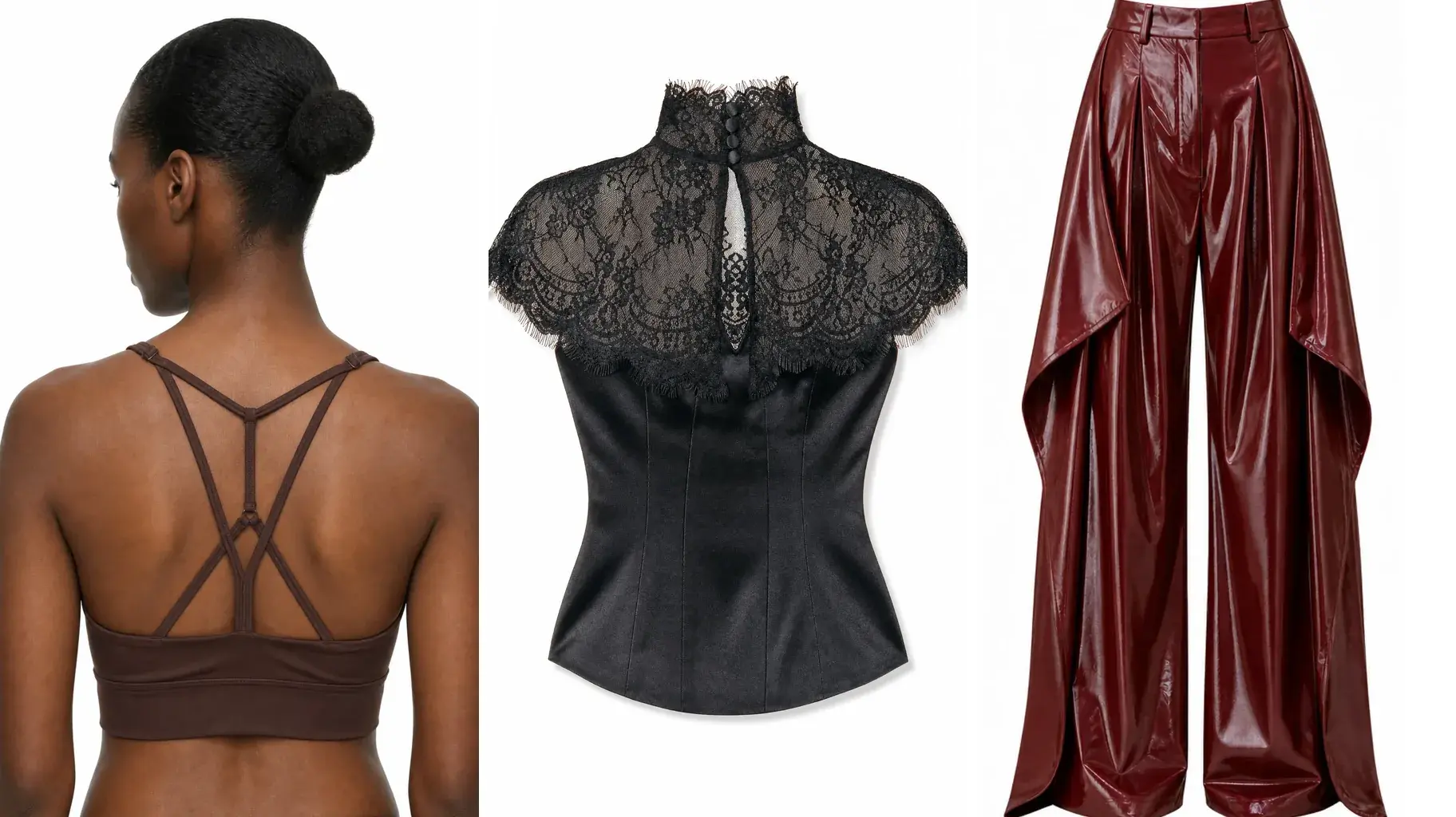
- Fabric and color: composition, texture, weight, finish and the exact color (crimson is not burgundy).
- Fit and drape: whether it’s fitted or loose, whether it runs true to size, where it hits and how the fabric falls.
- Construction: neckline, sleeves, straps, closures, finishes.
- Variants: every color and every size, with real stock.
And there’s a second factor: volume. The more SKUs you have well documented, with quality photos and descriptions, the more different questions you can answer and the more often you show up as an option. A brand with 200 well-described pieces has far better odds than one with 200 pieces and one photo each.
Photos count too: today’s agents understand images, and every angle tells them something about the piece that the text doesn’t. We cover it in AI recommends what it understands best.
How to get your catalog ready for agents
You don’t need to wait for agentic commerce to go mainstream. Here’s what you can do today:
- Describe every piece with data, not just adjectives. Fabric, exact color, fit, drape and construction. The aspirational copy can stay, but the information has to come first.
- Load every variant. Every color and every size as a real variant, with up-to-date stock. An out-of-stock variant that the agent recommends is a customer who loses trust in you.
- Show the piece from every angle. Front, back, detail and on model. Photos also give the agent context and clear up doubts when the shopper lands on your page.
- Keep one source of truth. Your site, your social channels and your marketplaces should all say the same thing. Contradictions confuse people and machines alike.
- Measure it. Check how much traffic comes from ChatGPT, Gemini or Perplexity and how it converts. It’s the fastest-growing channel you have.
How you solve it with Curva
Documenting every SKU well takes time, and shooting every variant with a traditional production is expensive and slow. That’s exactly the bottleneck Curva removes:
- Automatic descriptions. When you upload a piece to your catalog, Curva analyzes it and writes a technical description: fabric and color, construction, fit and what to avoid when showing it.
- Editable by your brand. That description is the source of truth for the production. If you want the red to be exactly your Pantone, or to spell out how a fabric drapes, you change it and every image follows it.
- Photos at scale. From that base, you produce every photo of every piece and every variant: front, back, angles, model and setting, true to the real garment. From the lookbook to the campaign.
The result is a catalog that helps your customer fall in love, and helps their agent pick you.
What’s next
SEO was about ranking on Google. What’s next is ranking with agents. And in fashion, that’s won piece by piece: with precise descriptions, complete variants and photos that show the garment as it really is.
Sources
- Ecosistema Startup, Tiendanube suma 30 agentes de IA al comercio agéntico (sales from ChatGPT, in Spanish).
- Ecosistema Startup, Tiendanube: la IA triplica el tráfico en CyberMonday 2026 (in Spanish).
- iProfesional, Cómo la inteligencia artificial está cambiando la forma de comprar en CyberMonday 2026 (conversion of AI traffic, in Spanish).
- Fin, What Is Agentic Commerce? (protocols and how agents choose).
Your next customer might never see your website. Make sure their agent picks it. Book a demo and we’ll show you your catalog with your own garments, or start free.