Agentic commerce: AI doesn’t recommend at random, it recommends what it understands best
More and more shoppers ask ChatGPT or Gemini to find their clothes. What the Adobe and McKinsey data says, and why AI recommends the piece it understands best: the one with the most angles, at the highest quality.
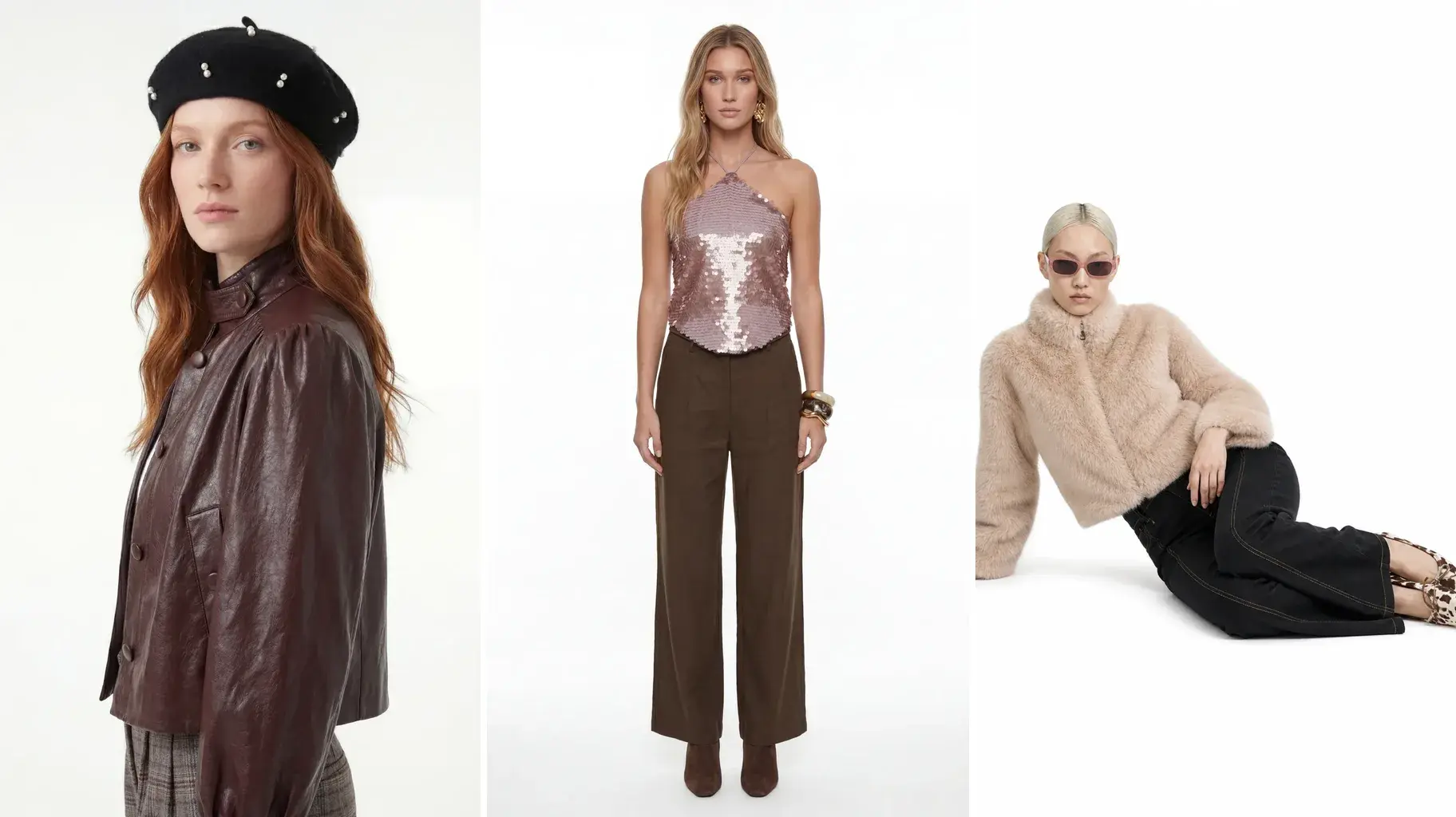
Not long ago, your customer typed “black linen dress” into Google, opened ten tabs and compared. Now they type into ChatGPT: “find me a black linen dress for a daytime wedding, under $80.” The AI goes through the stores, rules things out, compares and comes back with four options, each with its photo and its price. Your customer picks one and lands straight on that product page.
That’s agentic commerce: an AI assistant that searches, compares and, more and more often, buys on someone’s behalf. And those four options aren’t picked at random. AI recommends what it understands best. The more it knows about a piece (what it looks like from the front and the back, what it’s made of, how it falls when worn), the more questions it can answer about it and the easier it is to pick.
What agentic commerce is
An agent is an AI that doesn’t just answer: it does things. In retail, that means the assistant understands what the person needs, searches many stores at once, filters by size, price or fabric, and puts together a short recommendation. In the most advanced case, it also pays.
It’s already happening in ChatGPT, Gemini and Google’s AI Mode, in Perplexity and in the shopping platforms’ own assistants. It flips the order of things: the shopper used to look at many stores and choose; now the AI looks for them and shows them a few.
The numbers
Adobe tracks more than a trillion visits to US online stores, and McKinsey surveys shoppers across several markets. This is what they found.
| What was measured | The number | Source |
|---|---|---|
| Store visits coming from an AI | +62% year over year (July 2026), and more than 13 times the October 2024 level | Adobe |
| Conversion on those visits | 60% higher than other traffic, ahead for eleven months in a row | Adobe |
| Revenue per visit | 53% higher than other traffic | Adobe |
| Behavior on site | 59% more time on site, 33% lower bounce rate, 28% more add-to-carts | Adobe |
| Shoppers already using AI to shop | More than half, in a survey of 21,000 people in 11 countries (June 2026) | McKinsey |
| Purchases run by agents in 2030 | Up to $1 trillion in the US and $3 to $5 trillion globally, goods only | McKinsey |
Two things stand out. First: whoever arrives from an AI has already half made up their mind. They asked, compared and picked your piece over others; that’s why they convert more and spend more. And a year ago it wasn’t like this: in mid-2025 these visits converted worse than the rest. It changed fast.
Second: the volume is still small. Similarweb estimates AI drives less than 1% of visits to online stores. It’s growing fast, but it won’t replace Google, Instagram or Meta ads overnight. This is the time to get ready, not to drop everything else.
Buying inside the chat hasn’t taken off yet
In September 2025, OpenAI launched checkout inside ChatGPT: the shopper could buy without leaving the conversation. Six months later it pulled back and moved purchases to each retailer’s app, with payment on the retailer’s side. Google, meanwhile, introduced its own standard for agents to buy, built with Shopify, Etsy, Wayfair, Target and Walmart.
In practice, the path today is this: the AI recommends, the purchase happens on your store. The shopper discovers the piece in the chat and ends up on your product page. That changes what you need to get right.
AI doesn’t recommend at random: it recommends what it understands best
An assistant doesn’t see your store the way a person does. It reads the product name, the description, the price, sizes, stock. And it looks at the photos: today’s AI models understand images, so every photo tells it something about the piece that the copy doesn’t.
Think of it as a question. Your customer asks the AI for “a black dress that isn’t low-cut in the back.” If your dress has a single front shot, the AI doesn’t know what the back looks like, and it can’t recommend it with confidence. If it has the back, the fabric detail and the piece worn in motion, the answer is right there. Between a piece the AI half understands and one it fully understands, it recommends the second.
That’s why every angle a piece adds is information:
- Front and back, for the full shape.
- Detail, for the fabric, the weave, the buttons, the seams.
- On model, for fit, length and drape.
- In context, for the occasion: a daytime wedding, the office, the beach.
- On video, for movement: how the fabric moves when you walk.
And quality matters as much as quantity. A blurry photo, fabric that looks like plastic or a warped print gives the AI the wrong information, and your customer a bad first impression. Because in the end the AI chooses with what it understands, but the shopper chooses with their eyes: the assistant shows four cards side by side, and your piece is competing right there against three other brands.
Adobe measured how much of a store’s homepage an AI can read, and apparel does better than any other category: 76% of the content is readable, against 59% for grocery. But across all retailers, nearly 4 in 10 homepages aren’t machine-readable. There’s a lot of room to stand out.
What your store needs
- More angles per piece. Front, back, detail, on model, in context and on video. Each one answers a question your customer can ask the AI.
- The whole catalog, not just the campaign. The agent recommends the piece that best answers the request, which often isn’t the hero shot. All forty pieces need their angles, not just the five in the campaign.
- Quality in every photo. The real texture of the fabric, a crisp print, the right light. Whatever the photo shows badly, the AI understands badly.
- A grid that looks like one brand. Same model, same light, same background. In the chat card, consistency is what makes your piece look more premium than the one next to it.
- Complete, written product pages. Fabric, fit, measurements, sizes, care, and the model’s height and size, in text. If it isn’t written or shown, the AI doesn’t know it.
- Let AI in, and measure it. Check that your store doesn’t block ChatGPT’s, Gemini’s or Perplexity’s crawlers. And in your analytics, look at how many visits come from chatgpt.com, gemini.google.com or perplexity.ai, and how much they sell.
Where Curva comes in
Six angles per piece, with the same model and the same light, for the whole catalog and every collection. With a traditional shoot, that’s a budget almost no brand can cover for every SKU. So most end up with one or two photos per product, and the AI only half understands their pieces.
Curva is the platform your own team runs to produce all those angles:
- Every angle of every piece. You upload the photos you already take when inventory arrives (on a mannequin, on a hanger or flat lay) and produce front, back, detail, on model, the lookbook, the campaign and the video.
- The quality of the best models. The best image and video models are inside, and we use the right one for each piece: one that handles shine and texture for leather or satin, another that writes crisp lettering for a print, another for video. We cover it in which AI to use for your product photos.
- One brand. You define the style once (the model, the light, the backgrounds) and it applies to everything. The piece that comes out is the one in your warehouse.
We explain how it works under the hood in AI models for clothing, and why video matters more every season in the end of the static catalog.
What we get asked the most
Is this only for big retailers? No. The AI doesn’t care how big the brand is; it cares whether the data is clear and the photos answer the question. A small brand whose pieces the AI understands well can show up next to a big one.
How many photos does each piece need? There’s no magic number, but a single front shot leaves a lot of questions unanswered. Front, back, detail and on model are the baseline; context and video add on top.
Do I need to sell inside ChatGPT? Not today. The purchase still happens on your store. What you need is for the AI to find your piece and for your product page to convince.
Does Google stop mattering? No. It still drives far more traffic. The good news is that what helps you with AI (complete product pages, clear photos, a fast store) also helps you with Google.
How long until AI buys on its own? According to McKinsey, most people want AI to suggest options and to make the final call themselves. Recommendation is already here; automatic buying is coming more slowly.
Sources
- Adobe Analytics, August 2026 AI traffic report, as reported by Digital Commerce 360.
- McKinsey, Who wins when AI does the shopping? New evidence on agentic commerce (2026).
- McKinsey, The agentic commerce opportunity (October 2025).
- McKinsey, Europe’s agentic commerce moment (2026).
- Similarweb, State of Ecommerce 2026.
- Google, Universal Commerce Protocol.
AI recommends what it understands best. The more angles each piece has, and the better they are, the easier it is to pick you. Start free and try it with your own garments.