AI models for clothing: how they work and what to look at before choosing a platform
Generating photos of your garments worn by AI models is now viable for selling. How the process works, what results to expect and the six points that decide whether a platform works or not.
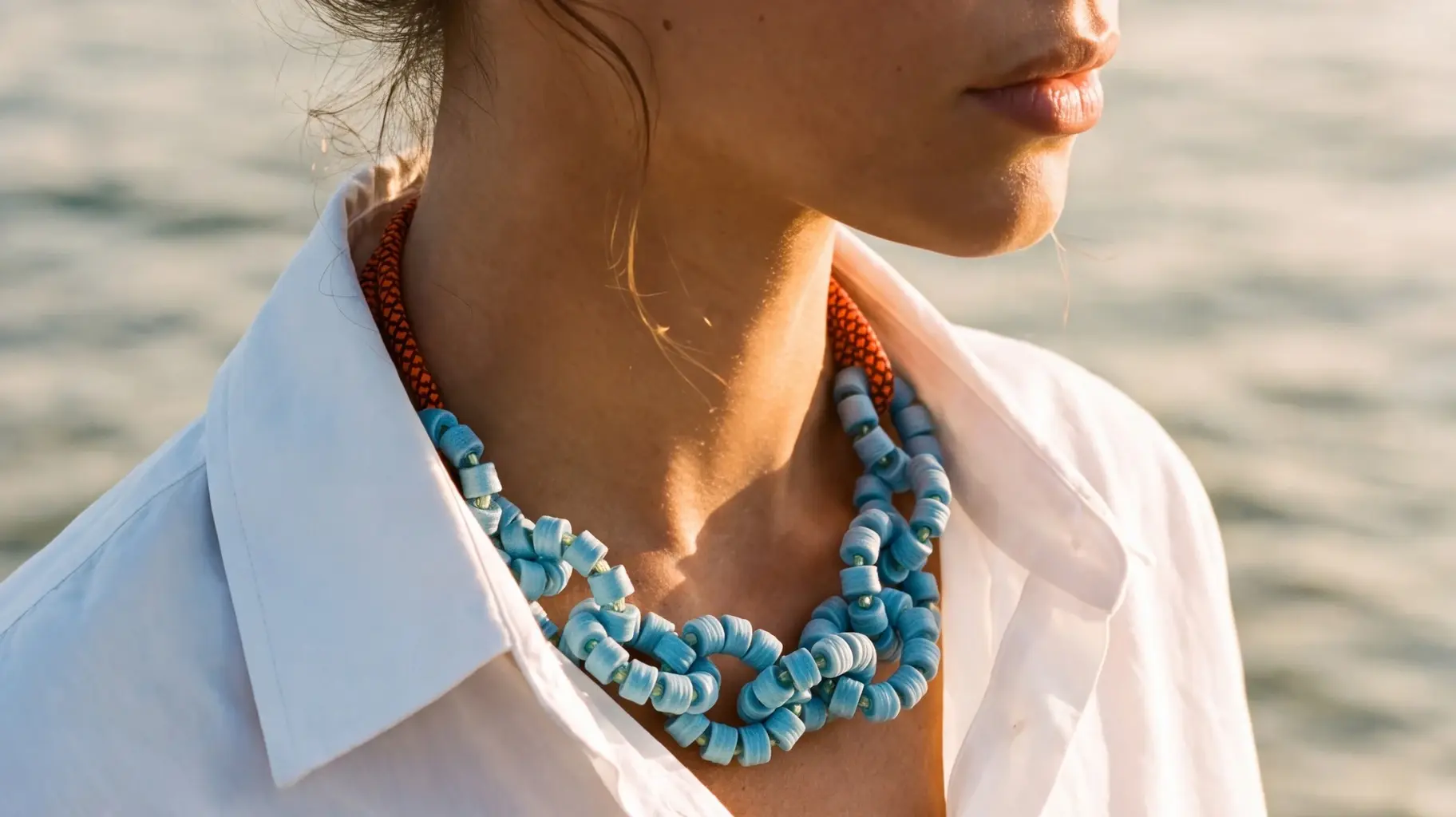
Two years ago, AI-generated clothing photos were a curiosity: you could spot them a mile away, the hands came out wrong and the garment was never exactly yours. Today there are brands publishing entire catalogs produced this way, and customers can’t tell.
But the leap in quality came with an avalanche of tools, and not all of them work for selling clothes. This article explains how the process really works and, above all, what to look at before choosing which one to work with.
How the process works
The most common confusion is thinking you describe a garment to the AI and it makes one up. That exists, but it doesn’t work for selling: the garment that comes out isn’t yours, and a photo of a product that doesn’t exist isn’t a product photo, it’s an illustration.
The workflow that does work starts from your real garment:
You upload the photos you already have. It can be a flat lay, a mannequin shot or a photo on a hanger. They don’t need to be pretty; they need to be faithful: good light, correct color, the whole garment and no odd wrinkles. The more angles you have (front, back, a texture detail), the better the result.
You define the style once. What kind of model, what setting, what light, what mood. This is art direction, and it’s the part that decides whether your catalog looks like a brand or a collage of loose images.
You generate. The platform produces images of that garment worn by a model, in the defined setting. What used to be a two-week shoot becomes a process of minutes, repeatable for the whole collection.
You review and adjust. No serious tool expects you to accept the first output. You regenerate, correct, choose.
What a brand gains
Speed. Fashion’s historic bottleneck isn’t designing or manufacturing the garment: it’s the photo. Between coordinating model, photographer, studio and editing, weeks go by. With generated production, the collection is photographed the same day it arrives.
Volume with no marginal cost. A traditional shoot has an almost fixed cost: you book the day. If you want three different settings, that’s three shoots. With AI, generating the fiftieth variant costs practically the same as the first, which completely changes what you can afford to try.
Consistency. The entire catalog with the same light, the same treatment and the same aesthetic, even if the garments arrived at different times. That’s hard to achieve when a different team shoots every season.
Real testing. You can generate five versions of the same product in different contexts, publish them as ads and let the data decide which one sells. Before, that test cost five productions.
The six points that decide whether a platform works
Here’s what matters, and it’s where serious tools part ways with toys.
1. Garment fidelity
It’s criterion number one and it allows no nuance. The generated image has to respect your real garment’s texture, color, print, length and construction details. If the sweatshirt comes out with a collar that isn’t yours, or the color shifts from army green to olive, the photo is useless: it promises something different from what arrives at the door, and that comes back as a return.
When you test a platform, don’t check whether the photo is pretty. Use your hardest garment (a complicated print, a textured knit, something with buttons or appliqués) and compare it in detail against the original.
2. Fit handling
An oversized T-shirt and a fitted one behave differently on a body. If the tool returns everything with the same generic fit, you’re showing a garment that isn’t the one you sell. Pay special attention to sleeve length, the fall of the hem and how the fabric sits on the shoulders.
3. Consistency across images
Generating one good photo is easy. Generating two hundred that look like the same campaign is the real problem. Ask how the brand style is defined and reused, and whether the model can repeat across products: a catalog where each garment is worn by a different person reads as messy.
4. Body diversity
If you sell up to XXL and all your generated models are a size S, you have a conversion problem, not an aesthetic one. A customer who doesn’t see herself represented doesn’t buy. Check that the platform handles different bodies, ages and skin tones with the same quality.
5. Video, not just photos
The static catalog has lost ground to video on social and on product pages. If the platform only gives you images, in six months you’ll be solving video somewhere else.
6. Usage rights
Ask explicitly whether you can use the images in paid advertising, whether they’re yours and whether there are any usage limits. It’s boring, and it’s the point that causes problems later.
What’s still worth knowing
Being honest is also part of choosing well. AI production doesn’t replace everything. A brand campaign with a strong idea, a real location and specific casting still has a value no tool replaces, and in fact it usually works better combined: the big campaign is produced once a year, and all the day-to-day volume is generated.
It doesn’t save you art direction either. The tool executes fast, but if nobody has defined how your brand looks, what you’ll get is a fast catalog with no identity.
And it still needs decent input material: if you upload dark photos, with off color and a wrinkled garment, no AI will guess it.
How it compares with the other options
If you’re weighing this against the traditional ways of shooting without hiring a model, the full comparison is in clothing photos without a model. In short: the invisible mannequin handles the white-background product page very well, and generated models handle everything else (lookbooks, campaigns and ads), which is where the sale is decided.
What it looks like with Curva
Curva is a platform your own team runs. You upload photos of your garments, define your brand’s style once and produce photos and videos of the whole collection ready to publish: no studio, no shoot and no depending on anyone’s schedule. Garment fidelity is where we put our focus, because it’s what decides whether a photo is good for selling or just for looking.
If you want to see it with your own catalog, start now and try it with your own garments.