Fashion marketing agency vs. in-house team: which is more profitable?
Outsource content to an agency or build the team in-house? What each option really costs, what each wins on speed and control, and why more and more brands choose a third way.
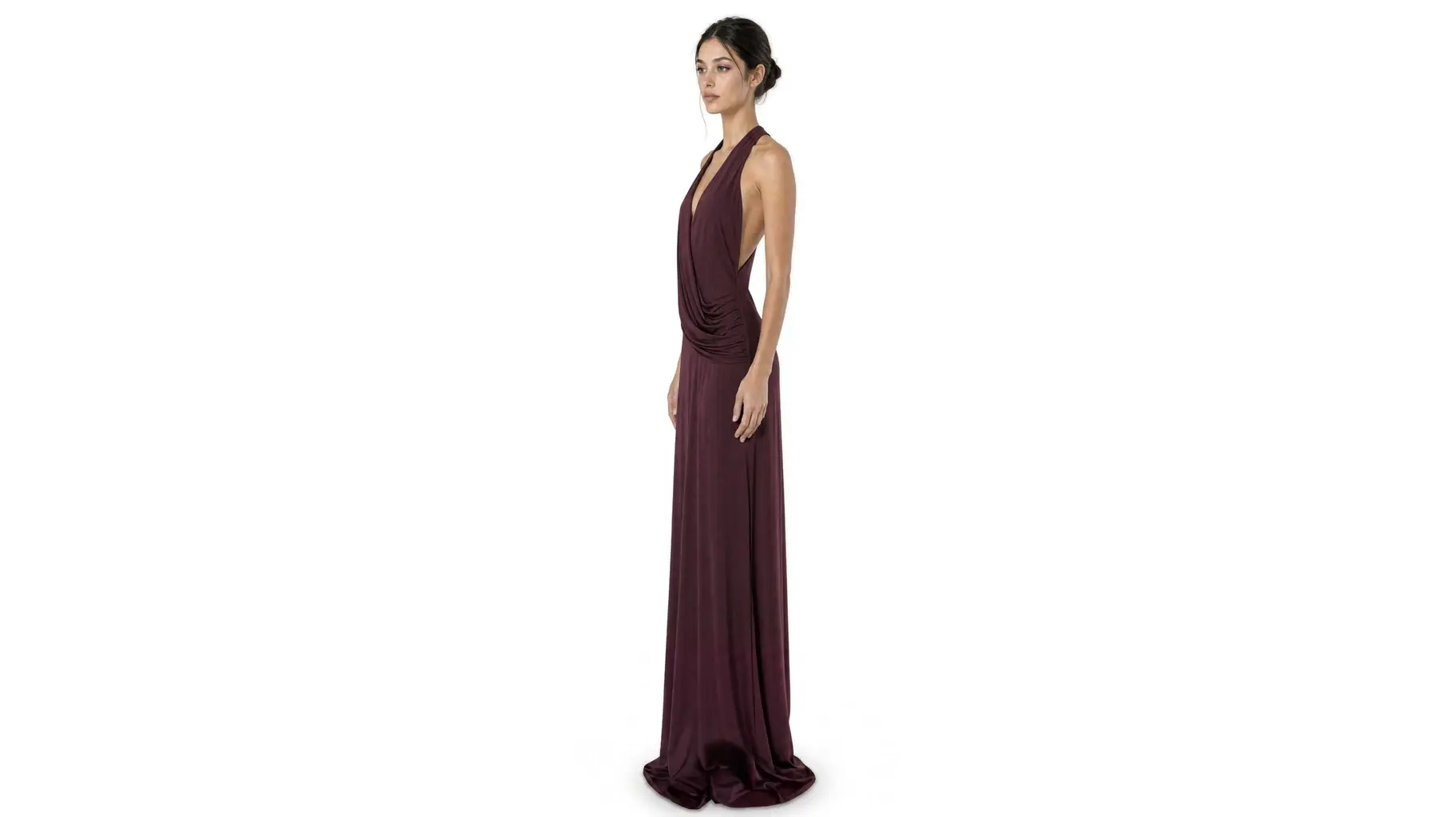
Every growing clothing brand hits a point where the photos someone on the team took with their phone aren’t enough anymore, the store needs content every week and social needs it every day. That’s when the question that moves the most money all year shows up: do I hire an agency or build my own team?
The short answer is that it depends on how much content you need per month. The long answer is that you have to look at three things (money, speed and control) and that, in 2026, there’s a third option that changes the math.
What an agency costs
A fashion marketing agency charges a monthly fee for strategy and management, and quotes each production separately: shoot, models, location, styling, editing. For a small or mid-sized brand, the final number is usually 40% to 50% lower than a full in-house team. In Darkroom’s 2026 survey, that’s US$250,000 to US$350,000 a year versus about US$590,000 to build the same team in-house.
That’s the strong argument for the agency, and it’s real. What doesn’t show up in the comparison is that the fee is the tip of the iceberg: every new campaign is a new budget, every change is another round, and every garment that arrives late to the shoot goes without a photo until the next one. We dig into it in what outsourcing your content really costs.
What an in-house team costs
Building the team in-house means salaries: someone to produce, someone to edit, someone to think up the content and publish it. Plus a camera, lights, a space to shoot and models for each session. It’s the big number above, and it also has hidden costs: the time to find the people, the time for them to learn the brand, and turnover when they leave.
In return, it gives you what the agency can’t: people who live the product, who know which garment sells and which doesn’t, and who respond the same day. That’s why, according to the same study, operational efficiency is the number one reason to bring content in-house, cited by 83% of marketing leaders.
Speed: weeks versus days
Here the difference is brutal. With an agency, the circuit is brief, proposal, approval, production, delivery: three to six weeks for a campaign. With an in-house team, a new photo can be online the next day.
In fashion that’s no small detail. A collection that waits four weeks for its photos is a collection that loses four weeks of the season, and the season doesn’t stretch. We ran the numbers in the real cost of being slow.
Control: who looks after the brand’s voice
An agency brings specialization and an outside perspective, which is sometimes exactly what you need. But it also brings team turnover, and every account change means explaining who you are all over again. The in-house team knows the brand by heart; the risk is the opposite: closing in and always repeating the same thing.
The math almost nobody does: cost per piece
Comparing annual fees only gets you so far. What defines profitability is how much each photo and each video you publish costs you, and there the math changes with volume.
Think of an example. A brand that launches four seasons and a few drops a year, with about 80 new products per season in three or four colors each, needs more than a thousand product photos a year, plus lookbook, plus ads, plus video. With an agency, each of those pieces comes from a separately quoted shoot. With an in-house team, the fixed cost is high but it’s spread across all of them.
That’s why the rule of thumb is this: at low volume, the agency is cheaper; at high volume, the in-house team is cheaper. The problem is that most brands are in the middle, where neither one fully works.
The third option: a small team, the platform in-house
What changed in the last two years is that producing photos and videos no longer requires setting up a studio or booking a shoot. An AI production platform takes simple photos of your garments and generates images and videos of those same garments worn by models, in your brand’s style, in minutes.
That enables a model that didn’t exist before: one or two people in-house who know the brand, running a tool that produces like an entire team. The fixed cost is a subscription, not a studio. The speed is in-house speed. Control is total, because your team defines the style once and it’s applied to everything.
It doesn’t replace the agency for everything: a big editorial campaign or an idea that needs an outside eye are still territory for an external partner. But day-to-day content (product pages, lookbooks, seasonal campaigns, ads) is exactly what has the most volume, and it’s what a platform solves best.
So which one makes sense?
- If you launch rarely and nobody in-house can dedicate time to it, an agency is still the simplest option.
- If you launch often, with many variants, and content is slowing your sales, a small in-house team plus a platform.
- If you’re a large brand with budget, a hybrid: strategy and identity in-house, daily production on a platform, and an agency for one-off campaigns.
The question is no longer “agency or in-house.” It’s how much of your content your own team can produce, today, without waiting on anyone.
What it looks like with Curva
In Curva you upload the photos you already have of your garments, define your brand’s style once, and your team produces photos and videos of the whole collection ready to publish. No studio, no shoot and no depending on anyone’s schedule.
If you’re deciding how to set up your content for next season, start now and try it with your own garments.
Source: Darkroom. (2026). Marketing agency cost 2026: Real pricing by service. View